
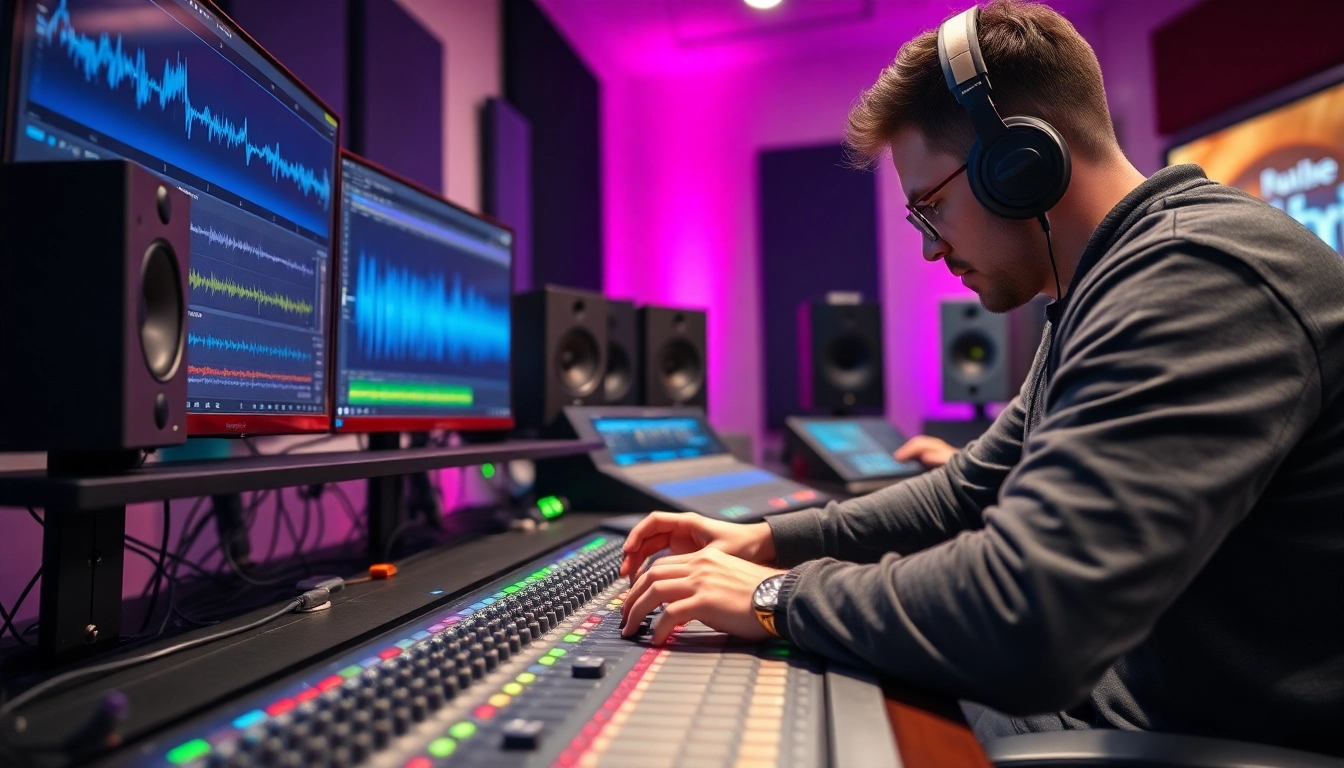
Understanding Online Audio Mastering
What is Online Audio Mastering?
Online audio mastering is a crucial step in the music production process that ensures your tracks sound polished and professional. This service allows you to finalize your music by enhancing its quality and preparing it for distribution. Unlike traditional mastering done in a physical studio, online audio mastering takes advantage of advanced digital tools to process audio tracks remotely. This approach has democratized access to high-quality mastering services, making them available to independent artists and producers around the world.
Key Benefits of Online Audio Mastering
The shift to online audio mastering services brings numerous benefits:
- Cost-Effective: Online platforms often provide competitive pricing compared to traditional studios, making mastering accessible to a wider audience.
- Convenience: You can upload your tracks from anywhere and choose services that fit your schedule without the need for physical appointments.
- Fast Turnaround: Many online services offer quick processing times, allowing artists to receive mastered tracks within hours or days.
- Variety of Options: Online services typically provide a range of mastering styles and formats to accommodate diverse musical genres.
- Streamlined Communication: Modern platforms facilitate clear communication and tracking through user-friendly interfaces.
How Online Audio Mastering Works
Online audio mastering generally follows a structured process. Artists upload their mixed tracks to the platform of their choice, where they may select specific mastering services or presets tailored to their musical genre. The audio engineers then apply various processing techniques, including equalization, compression, limiting, and stereo enhancement, to optimize the sound quality. Once the mastering is complete, the finalized track is delivered back to the artist in the desired format.
Choosing the Right Online Audio Mastering Service
Factors to Consider
When selecting an online audio mastering service, consider the following:
- Quality of Service: Research the service’s reputation by checking samples of their work. A quality mastering service will have a track record of delivering well-balanced, professional-sounding tracks.
- Audio Engineering Expertise: Assess the qualifications and experience of the engineers working on your tracks. Look for credits on notable projects or testimonials from previous clients.
- Customization Options: A good service should offer customizable mastering options—basic presets may not be suitable for every genre or track.
- Pricing Structure: Compare pricing between services, but remember that the cheapest option isn’t always the best. Value for money is preferred.
- Delivery Time: Ensure that the service can meet your deadlines without compromising quality.
Comparative Analysis of Service Providers
To effectively choose from available online audio mastering services, it’s beneficial to create a comparative chart that includes key metrics like pricing, turnaround time, and quality ratings based on user experiences. Conducting this kind of analysis will help you find a service that aligns with your requirements and ensures the best possible outcome for your music.
Customer Testimonials and Reviews
Before making a selection, read customer testimonials and reviews. Genuine feedback from previous users may provide insights into the company’s reliability and the quality of the mastered audio. Look particularly for reviews that detail specific experiences, such as responsiveness to revisions and the final results of their tracks.
The Online Audio Mastering Process
Preparing Your Tracks for Mastering
Properly preparing your audio tracks before uploading them for mastering is essential. Here are some best practices:
- Ensure your tracks are mixed properly, with no clipping or distortion.
- Leave headroom in your tracks; aim for about -6dB to -3dB on the master fader to prevent clipping during the mastering process.
- Organize your audio files clearly and provide detailed notes on any specific requests or expectations for your mastering session.
Typical Steps in the Mastering Process
The mastering process typically includes the following steps:
- Analysis: Mastering engineers first analyze the track to identify areas for improvement.
- Equalization: Adjusting the tonal balance by enhancing certain frequencies while reducing others to achieve clarity.
- Compression: Applying compression to control dynamics and ensure consistency across the track.
- Limiting: Final limiting is used to maximize loudness without introducing distortion.
- Exporting: The final mastered track is exported in the desired formats for digital distribution.
Common Mistakes to Avoid
As you navigate the online audio mastering landscape, be wary of common pitfalls:
- Rushing the Mixing Process: A poorly mixed track will not benefit from mastering; always ensure your mix is polished before submission.
- Ignoring Reference Tracks: Use professional reference tracks in a similar genre to set a benchmark for the mastering process.
- Over-processing: Overdoing EQ or compression can distort the track’s natural sound; moderation is key.
- Neglecting to Communicate: Make your expectations clear and provide feedback to ensure the mastering engineer understands your vision.
Advanced Techniques in Online Audio Mastering
Using EQ and Compression Effectively
Equalization and compression are two of the most powerful tools in the mastering engineer’s arsenal. When used correctly, EQ can clarify and enhance the overall mix, accentuating desirable frequencies without overwhelming the track. Layering multiple slightly different EQ settings can help create depth.
Compression, on the other hand, should be applied thoughtfully to maintain dynamic range while controlling peaks. A combination of multi-band compression may be used for precision, ensuring power in the bass while keeping vocals and highs crisp without losing punch.
Adding Depth with Stereo Imaging
Stereo imaging adds a sense of space and depth to your tracks, making them sound more immersive. Mastering engineers use stereo widening techniques judiciously to create an expansive sound stage while ensuring that the mix retains its coherence. Avoid excessive widening, as it can lead to phase issues that may detract from the overall quality.
Final Touches and Quality Assurance
Quality assurance is the final step before delivering mastered tracks. This includes critical listening tests on various playback systems, such as headphones, studio monitors, and consumer devices. Ensuring consistent sound across all these formats is crucial for successful release. Additional tweaks may be made during this stage to perfect the final product, adjusting levels and making subtle sonic enhancements.
Measuring Success in Online Audio Mastering
Performance Metrics to Track
To gauge the success of your mastering efforts, keep an eye on several metrics:
- Listening Habits: Track how listeners engage with your music across different platforms—streaming counts, downloads, and shares.
- Feedback from Peers: Collect constructive feedback from trusted fellow musicians or producers on the quality and impact of your mastered tracks.
- Sales Metrics: For commercial releases, analyze sales data to understand the performance in various markets.
- Online Presence: Monitor social media engagement and comments on your tracks to assess listener reception and reactions.
Feedback and Iteration in the Mastering Process
Engaging in a feedback loop is essential for improving mastering practices. Listening to critiques from trusted sources, incorporating their insights, and iterating on the mastering process can lead to more satisfying final products. A collaborative approach with mastering engineers can also foster better end results, as they can work to accommodate your stylistic preferences.
Case Studies of Successful Mastered Tracks
Examining case studies of well-mastered tracks can provide valuable insight into successful practices. For example, consider an independent artist who utilized an online audio mastering service; by responsibly applying EQ, compression, and stereo techniques, the artist transformed a raw demo into a polished single recognized on streaming platforms. Highlighting how different elements contributed to the success of a track can serve as a roadmap for aspiring musicians and producers.
FAQs
What is the difference between mixing and mastering?
Mixing involves combining individual tracks, adjusting levels, and applying effects. Mastering is the final polish, preparing mixed tracks for distribution by enhancing sound quality and ensuring consistency across playback systems.
How long does online audio mastering usually take?
Turnaround times vary by service, but many offer quick options ranging from a few hours to a few days. Factors include the service’s workload, complexity of tracks, and chosen packages.
Can I master my tracks myself?
While it’s possible to master your own tracks, professional mastering can provide an objective ear and expertise that often yields higher-quality results, especially for commercial releases.
What audio formats should I submit for mastering?
Common formats for submission include WAV and AIFF files due to their high fidelity. Always check the specific requirements of the online mastering service you are using before uploading.
Do I need to provide notes for the mastering engineer?
Yes, providing notes about your vision, references, and specific requests can greatly help mastering engineers understand your expectations and tailor their approach accordingly.